Manufacturıng Sector And Industrıal Facılıty Mechanıcal…
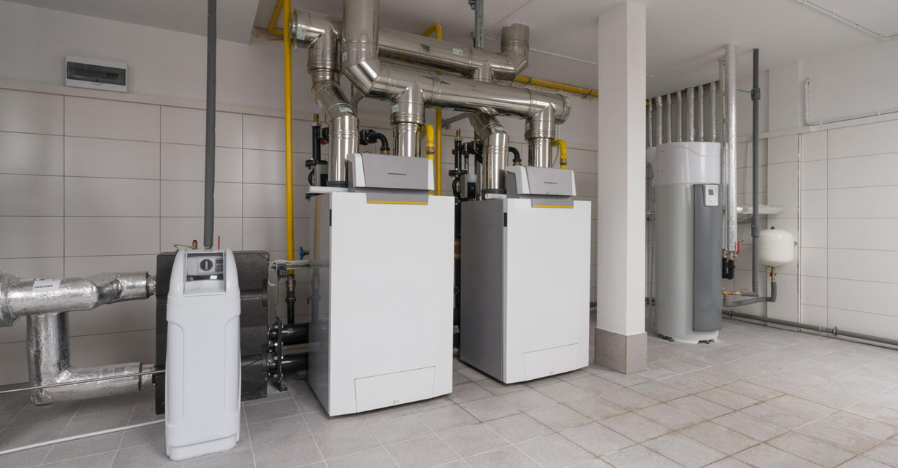
Industrial facilities, manufacturing plants, organized industrial zones, logistics centers, and industrial production areas require high-capacity mechanical installation systems. Factory mechanical installations not only provide employee comfort but also serve as critical engineering systems that directly affect production continuity, product quality, energy efficiency, and occupational safety. In modern manufacturing facilities, ventilation systems, fire extinguishing installations, compressed air systems, industrial heating systems, VRF air conditioning systems, and common installation systems operate in an integrated manner.
In factory projects, design is carried out by taking ASHRAE, NFPA, EN, DIN, ISO, API, ASME, and TSE standards into consideration. Mechanical installation systems designed in accordance with the production process reduce energy consumption, increase operational efficiency, and provide long-term investment advantages.
Industrıal Ventılatıon Installatıons
Industrial ventilation systems are among the most important mechanical installation systems that ensure the control of heat, humidity, smoke, gas, dust, and pollutants generated in production areas. Ventilation systems used in factories are designed as general ventilation, local exhaust ventilation, process ventilation, and fresh air systems depending on the production process.
High-efficiency exhaust systems are used in welding workshops, paint lines, foundries, plastic injection facilities, CNC machining centers, and chemical production areas. Duct installations are manufactured from galvanized sheet metal, stainless steel, or specially coated sheets, and fans resistant to high temperatures are preferred.
Pollutant emissions are controlled through cyclone filters, cartridge filters, bag filter systems, electrostatic filters, and scrubber systems. Air flow rate, static pressure, duct velocities, and filter pressure losses are determined through engineering calculations.
Industrial ventilation systems protect employee health, increase production quality, and contribute to meeting occupational safety standards.
Fıre Extınguıshıng Installatıons
Fire safety in factories is of critical importance for the sustainability of the business. Fire extinguishing systems used in industrial facilities are specially designed according to the production process and fire load.
Fire installations include sprinkler systems, hydrant systems, fire cabinets, foam extinguishing systems, gas extinguishing systems, and water mist systems. Systems designed in accordance with NFPA, FM Global, and EN 12845 standards provide maximum safety.
While ESFR sprinkler systems are used in high-rack warehouses, foam extinguishing systems are preferred in paint facilities. FM200, Novec 1230, and inert gas extinguishing systems are used in electrical rooms, server rooms, and automation centers.
Fire pumps are designed with electric, diesel, and jockey pump combinations as backup systems, providing uninterrupted protection together with fire water tanks. Installations integrated with fire detection systems are automatically activated in emergency situations.
Pneumatıc Aır Installatıons
Pneumatic air installations are among the most important energy distribution systems of modern manufacturing facilities. Compressed air is considered one of the most commonly used auxiliary energy sources in many factories after electricity.
In pneumatic systems, screw compressors, piston compressors, air dryers, filter systems, air tanks, and distribution piping systems are used. Compressed air lines are generally formed with galvanized steel, aluminum, or stainless steel pipes.
ISO 8573 air quality standards are achieved by using particle filters, activated carbon filters, cyclone separators, and refrigerated dryers in these systems. Energy efficiency is increased by minimizing pressure drops.
Pneumatic air installations ensure the reliable operation of CNC machines, automation equipment, packaging machines, robotic production lines, and process equipment. Properly designed compressed air systems reduce energy costs while also ensuring production continuity.
Common Installatıons And Infrastructure Systems
Factory common installations consist of mechanical systems that serve all common-use areas outside production zones. These systems include clean water installations, wastewater systems, rainwater drainage, booster systems, process water installations, and technical infrastructure systems.
In large industrial facilities, water tanks, fire water tanks, drainage pumps, oil separator systems, and treatment plants are important infrastructure components. Depending on the production process, process water lines, cooling water installations, and chemical transfer lines are also designed.
Common installations are the basic systems that ensure the safe and efficient operation of the entire mechanical infrastructure of the facility. Operating costs can be significantly reduced through long-life equipment selection, correct hydraulic calculations, and high-quality applications.
Vrf And Vrv Aır Condıtıonıng Installatıons In Offıce Areas
VRF and VRV air conditioning systems used in factory management offices, administrative buildings, meeting rooms, and social areas are modern air conditioning solutions that provide high energy efficiency.
Thanks to variable refrigerant flow technology, each space can be controlled independently and different temperature requirements can be met. Outdoor units, cassette type indoor units, wall-mounted air conditioners, ducted indoor units, and concealed ceiling type units are used in these systems.
VRF systems allow long piping distances, offer low energy consumption, and provide high seasonal efficiency. Thanks to Heat Pump and Heat Recovery technologies, both heating and cooling can be performed at the same time.
VRF systems integrated with building automation systems provide advantages such as remote monitoring, energy management, and central control.
Unıt Heater And Radıant Heatıng Systems
One of the most efficient heating methods in high-volume factory buildings is hot air unit heaters and radiant heating systems. These systems provide energy savings especially in production areas with high ceilings.
Unit heaters operating with hot water or steam distribute hot air homogeneously throughout the production area thanks to their fan-assisted structure. They are widely used to provide rapid heating in large-volume areas.
In radiant heating systems, energy is transferred directly to people and surfaces. In this way, high efficiency is achieved in the required zones instead of heating the entire volume of air. Natural gas radiant tubes, ceramic radiant systems, and infrared radiant panels are widely used in industrial facilities.
Radiant systems provide significant energy savings especially in logistics warehouses, aircraft hangars, production halls, assembly facilities, and high-ceiling factories. Properly designed radiant and unit heater systems significantly reduce heating costs for businesses while also increasing employee comfort.
Proje, Uygulama Ve Devreye Alma Yaklaşımı
ASROYAL endüstriyel projelerde keşif, mühendislik hesabı, malzeme/ekipman seçimi, montaj, test-devreye alma ve satış sonrası teknik servisi uçtan uca yönetir. Proses ekipmanları ile mekanik tesisat arayüzleri üretim sorumluları ile birlikte koordine edilir.
Devreye alma aşamasında debiler, basınçlar, filtre dirençleri, yangın senaryoları ve otomasyon noktaları devreye alma protokollerine göre doğrulanır. Böylece tesis, tasarım kapasitesi ve güvenlik hedeflerine uygun şekilde işletmeye hazır hale getirilir.
Üretim sektörü projelerinizde havalandırma, yangın, pnömatik, ısıtma-soğutma ve ortak altyapı ihtiyaçlarını tek mühendislik paydaşıyla çözmek için ASROYAL uzman ekibi yanınızdadır.