What Are Dehumıdıfıcatıon Systems? Where Are Th…
Dehumidification systems are critical HVAC solutions that control relative humidity (RH) in enclosed environments, improve indoor air quality (IAQ), and protect building components. High humidity levels can lead to serious problems such as condensation, mold and bacterial growth, corrosion, and deformation of building materials. Therefore, humidity control is an engineering necessity, especially in sensitive application areas.
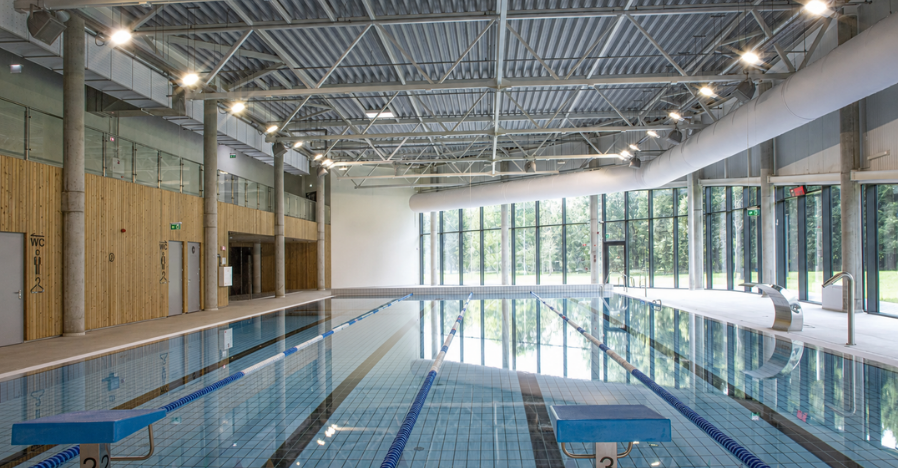
Indoor swimming pools are among the most critical applications for dehumidification systems. Water continuously evaporating from the pool surface creates relative humidity levels reaching 70–90% within the space. This condition causes condensation on glass surfaces, corrosion of metal equipment, and deterioration of building components. Therefore, humidity levels in pool areas should generally be maintained within the range of 50–60% RH. This control is achieved through specially designed pool-type dehumidification units.
Other important areas requiring humidity control include paper warehouses, archives, museums, art galleries, pharmaceutical manufacturing facilities, food storage facilities, and electronics production areas. Paper and organic materials can be directly affected and damaged by high humidity. In museums, maintaining stable humidity levels is vital for the preservation of historical artifacts. In industrial processes, humidity control is a critical parameter for production quality and process stability.
The dehumidification process is generally based on two fundamental principles: • Refrigeration (condensation) dehumidification systems • Adsorption (desiccant wheel) dehumidification systems
Pool-type Dehumıdıfıcatıon Unıts
Pool-type dehumidification units are professional HVAC solutions specifically designed to control the high humidity load generated in indoor swimming pools. Continuous evaporation from the water surface in indoor pool environments rapidly increases relative humidity (RH), causing condensation, mold growth, corrosion of building components, and hygiene-related issues. Therefore, the target is generally to maintain relative humidity within the range of 50–60% RH in pool areas. This control is achieved through high-capacity dehumidification systems.
The operating principle of these units is based on condensation (refrigeration dehumidification). Humid air is passed through the evaporator coil inside the unit and cooled below its dew point temperature. During this process, the water vapor contained in the air condenses into liquid form and is removed through a drainage system. The air is then passed through the condenser, reheated, and supplied back into the space with a lower humidity level. This process provides control of both humidity and temperature.
An important feature of pool-type dehumidification units is their heat recovery capability. The latent heat released during condensation can be recovered within the unit and used for heating the conditioned space or, optionally, for heating pool water through dedicated heating coils. This increases the overall energy efficiency (COP) of the system and reduces operating costs.
These units are generally designed in two different types: • Ducted type systems • Direct room type (free standing / wall mounted) systems
Ducted systems provide homogeneous air distribution in large pool volumes, while room-type units are preferred for smaller applications. In addition, these systems can operate integrated with fresh air intake, exhaust fan connections, and automation systems (BMS/PLC), continuously maintaining indoor air quality under control.
As a result, pool-type dehumidification units are indispensable climate control systems for indoor swimming pools, controlling high humidity loads, providing energy recovery, and protecting building structures.
Wall-mounted Dehumıdıfıcatıon Unıts
Wall-mounted dehumidification units are independent humidity control systems preferred in small and medium-sized spaces due to their compact design and ease of installation. These units are generally mounted on walls, occupy minimal space, and are designed to aesthetically integrate with the environment. Their operating principle is based on condensation (refrigeration dehumidification), where moisture is removed by cooling water vapor below its dew point temperature and condensing it.
Humid air entering the unit passes through the evaporator coil and is cooled, causing the moisture in the air to condense into liquid form. The condensate water is discharged through a drainage line. The air then passes through the condenser coil, is reheated, and returned to the space with a lower relative humidity level. This process provides humidity control without significantly changing the room temperature.
Wall-mounted dehumidification units are widely used in warehouses, archive rooms, museums, small pool areas, technical rooms, and electrical rooms where humidity control is critical. They minimize the risks of corrosion and condensation that may occur in environments containing sensitive equipment.
These units are generally equipped with a hygrostat (humidity sensor) controlled automation system. The hygrostat continuously monitors ambient relative humidity and automatically activates or stops the unit when the preset humidity value is reached. This feature improves energy efficiency while minimizing user intervention.
As a result, wall-mounted dehumidification units provide an effective and economical solution for small and medium-sized applications with their compact design, low installation cost, independent operation, and automatic humidity control capability.
Floor-standıng Dehumıdıfıcatıon Unıts
Floor-standing dehumidification units are high-capacity humidity control systems used in large spaces with high humidity loads, offering mobile or fixed installation options. These units are generally mounted on wheels (portable) or fixed frames, providing flexible use across different applications. Their operating principle is primarily based on condensation (refrigeration dehumidification), and their high airflow capacity enables rapid air circulation and efficient moisture removal.
In these units, humid air is passed through the evaporator coil by powerful fans and cooled below its dew point temperature to achieve condensation. The resulting condensate water can be collected in an internal tank or continuously discharged through a drainage line. The air is then passed through the condenser, reheated, and returned to the space with a lower relative humidity level. This process delivers high performance, particularly in applications requiring rapid drying.
Floor-standing dehumidification units are widely used in industrial warehouses, manufacturing facilities, construction sites, flood restoration projects, logistics centers, and building drying applications. Their high airflow rates (m³/h), powerful compressor structures, and durable body designs ensure reliable operation under demanding site conditions.
Some advanced models include hygrostat-controlled automation, timers, and digital control panels. These features allow precise adjustment of the target relative humidity value and optimization of energy consumption.
As a result, floor-standing dehumidification units are among the most effective solutions for both industrial and temporary drying applications due to their high capacity, rapid dehumidification performance, portability, and durability.
Desıccant (Adsorptıon) Dehumıdıfıcatıon Unıts
Desiccant (adsorption) dehumidification units are advanced HVAC solutions used in sensitive applications requiring very low relative humidity levels (typically 10–20% RH and below). Unlike conventional condensation-based dehumidifiers, these systems operate on the adsorption principle. Moisture removal is achieved through a rotating rotor (desiccant wheel) coated with hygroscopic materials such as silica gel, lithium chloride (LiCl), or similar substances.
In the operating process, humid process air passes through the rotor, and water vapor is retained (adsorbed) by the hygroscopic surface. The rotating wheel continuously turns at a low speed (typically 8–20 rpm), carrying the moisture-laden section into the regeneration (drying) zone. In this zone, high-temperature regeneration air (typically heated by electric heaters, hot water, or steam) desorbs the moisture from the rotor and discharges it outside. In this way, the rotor is continuously regenerated, ensuring uninterrupted dehumidification.
The greatest advantage of desiccant dehumidification systems is their ability to operate efficiently even at low temperatures. While condensation-based systems experience performance losses at low temperatures, adsorption systems provide stable dehumidification capacity. Furthermore, they maintain consistent and stable relative humidity levels in applications requiring precise humidity control.
These units are used in a wide range of applications including museums, archives, pharmaceutical and chemical ASROYALs, food production facilities, electronics manufacturing areas, defense industry facilities, and cleanroom applications. They are indispensable in environments containing hygroscopic or moisture-sensitive products.
As a result, desiccant dehumidification units stand out as one of the most advanced and reliable solutions in modern humidity control systems due to their ability to achieve very low relative humidity levels, high-precision control, wide operating temperature range, and industrial durability.
Yer Tipi Nem Alma Cihazları
Yer tipi nem alma cihazları, yüksek nem yüküne sahip geniş hacimli alanlarda kullanılan, mobil veya sabit kurulum imkanı sunan yüksek kapasiteli nem kontrol sistemleridir. Bu cihazlar genellikle tekerlekli (portatif) veya sabit şase üzerine monte edilerek farklı uygulama alanlarında esnek kullanım sağlar. Çalışma prensibi çoğunlukla kondenzasyon (soğutmalı nem alma) esasına dayanır ve yüksek hava debisi sayesinde ortam havasını hızlı bir şekilde sirküle ederek nemin etkin biçimde uzaklaştırılmasını sağlar.
Bu cihazlarda nemli hava, güçlü fanlar aracılığıyla evaporatör serpantini üzerinden geçirilir ve çiğ noktası sıcaklığının altına düşürülerek yoğuşma sağlanır. Oluşan kondens suyu, dahili tankta toplanabilir veya drenaj hattı ile sürekli tahliye edilebilir. Ardından hava, kondenser üzerinden geçirilerek tekrar ısıtılır ve ortama daha düşük bağıl nem oranı ile geri verilir. Bu süreç, özellikle hızlı kurutma gerektiren uygulamalarda yüksek performans sağlar.
Yer tipi nem alma cihazları; endüstriyel depolar, üretim tesisleri, şantiyeler, su baskını sonrası kurutma alanları, lojistik merkezleri ve inşaat kurutma uygulamaları gibi geniş kullanım alanlarına sahiptir. Yüksek hava debisi (m³/h), güçlü kompresör yapısı ve dayanıklı gövde tasarımı sayesinde zorlu saha koşullarında güvenilir şekilde çalışır.
Bazı gelişmiş modellerde higrostat kontrollü otomasyon, zamanlayıcı (timer) ve dijital kontrol paneli gibi özellikler bulunur. Bu sayede hedeflenen bağıl nem değeri hassas şekilde ayarlanabilir ve enerji tüketimi optimize edilir.
Sonuç olarak yer tipi nem alma cihazları; yüksek kapasite, hızlı nem alma performansı, taşınabilirlik ve dayanıklılık özellikleri sayesinde hem endüstriyel hem de geçici kurutma uygulamalarında en etkili çözümlerden biridir.
Tamburlu (Adsorpsiyon) Nem Alma Cihazları
Tamburlu (adsorpsiyon) nem alma cihazları, özellikle çok düşük bağıl nem seviyelerinin (genellikle %10–20 RH ve altı) gerekli olduğu hassas uygulamalarda kullanılan ileri teknoloji HVAC çözümleridir. Bu sistemler, klasik kondenzasyon esaslı nem alma cihazlarından farklı olarak adsorpsiyon prensibi ile çalışır. Nem alma işlemi, yüzeyi silika jel (silica gel), lityum klorür (LiCl) veya benzeri higroskopik malzemelerle kaplı döner bir rotor (desiccant wheel) üzerinden gerçekleştirilir.
Sistem çalışma prensibinde, nemli proses havası rotor üzerinden geçirilerek su buharı higroskopik yüzey tarafından tutulur (adsorbe edilir). Döner tambur, düşük hızda (genellikle 8–20 rpm) sürekli dönerek nem yüklü bölgeyi rejenerasyon (kurutma) bölgesine taşır. Bu bölgede, yüksek sıcaklıktaki rejenerasyon havası (genellikle elektrikli ısıtıcı, sıcak su veya buhar ile ısıtılmış hava) kullanılarak rotor üzerindeki nem desorbe edilir ve dış ortama atılır. Bu sayede rotor sürekli olarak yenilenir ve kesintisiz nem alma işlemi gerçekleştirilir.
Tamburlu nem alma sistemlerinin en büyük avantajı, düşük sıcaklıklarda dahi yüksek verimle çalışabilmesidir. Kondenzasyonlu sistemler düşük sıcaklıklarda performans kaybı yaşarken, adsorpsiyon sistemleri stabil nem alma kapasitesi sunar. Ayrıca bu sistemler, hassas nem kontrolü gerektiren uygulamalarda sabit ve kararlı bağıl nem değerleri sağlar.
Bu cihazlar; müzeler, arşivler, ilaç ve kimya endüstrisi, gıda üretim tesisleri, elektronik üretim alanları, savunma sanayi ve temiz oda (cleanroom) uygulamaları gibi geniş bir kullanım alanına sahiptir. Özellikle higroskopik veya nemden etkilenen ürünlerin bulunduğu ortamlarda vazgeçilmezdir.
Sonuç olarak tamburlu nem alma cihazları; düşük bağıl nem değerlerine ulaşabilme kabiliyeti, yüksek hassasiyetli kontrol, geniş çalışma sıcaklık aralığı ve endüstriyel dayanıklılığı sayesinde, modern nem kontrol sistemleri içerisinde en ileri ve güvenilir çözümlerden biri olarak öne çıkmaktadır.